
Noise is a constant companion if you’re living in Durban or anywhere near a busy street. Most people think double-glazing or thick walls are the main answer to quiet rooms. But did you know window coverings can absorb up to 60 percent of incoming sound waves, making them a secret weapon for creating peaceful homes? The best part is these solutions are stylish and completely transform room comfort in ways you might not expect.
Table of Contents
- How Window Coverings Improve Room Acoustics
- Best Choices for Sound-Reducing Window Coverings
- Stylish Acoustic Solutions for Durban Properties
- Expert Tips for Maximising Acoustic Comfort
Quick Summary
| Takeaway | Explanation |
|---|---|
| Window coverings enhance sound absorption. | They can absorb up to 60% of incoming sound waves, greatly reducing noise levels. |
| Heavyweight fabrics provide better noise reduction. | Materials like velvet and wool effectively trap sound waves, creating superior sound barriers compared to lighter options. |
| Full-length curtains improve acoustic performance. | Installing curtains close to windows creates better sound barriers and minimizes noise penetration. |
| Layering window treatments maximizes sound control. | Combining different types of window coverings can significantly enhance noise reduction and create quieter interiors. |
| Professional installation optimizes acoustics. | Strategic placement of window coverings, including proper mounting techniques, is crucial for maximum sound insulation. |
How Window Coverings Improve Room Acoustics
Window coverings play a crucial role in transforming room acoustics by managing sound reflection, absorption, and overall audio quality. Understanding the acoustic properties of window treatments reveals how strategically selected coverings can significantly enhance the acoustic environment of any space.
Sound Absorption and Noise Reduction
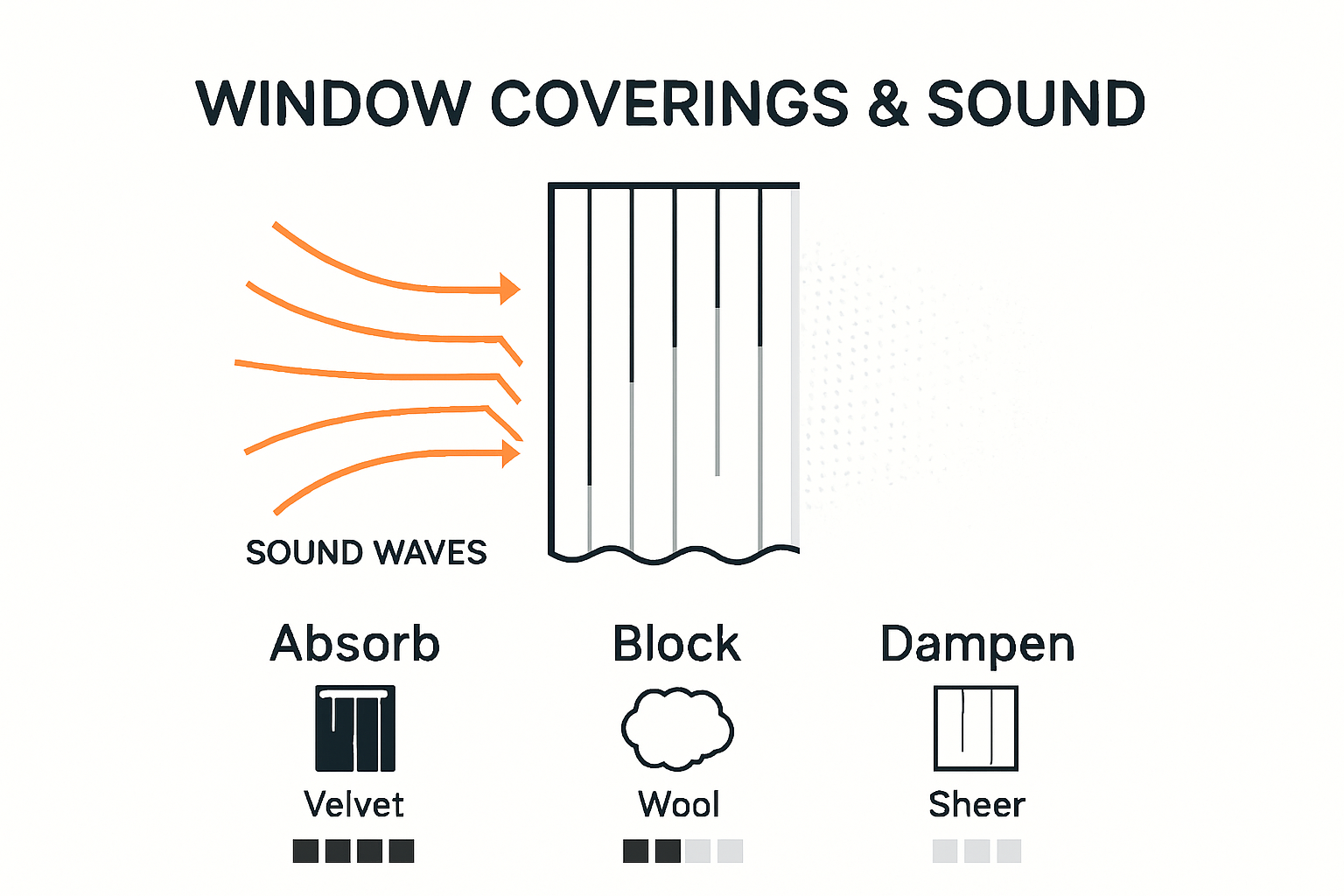
Sound absorption represents the primary acoustic benefit of window coverings. Hard surfaces like glass windows naturally reflect sound waves, creating echoes and amplifying noise. Explore our acoustic solutions that provide effective sound management. According to the National Research Council Canada, window treatments such as thick curtains, cellular blinds, and layered fabrics can absorb up to 60% of incoming sound waves, dramatically reducing ambient noise levels.
The material density and texture of window coverings determine their sound absorption capabilities. Heavyweight fabrics with complex weaves and multiple layers create more effective sound barriers compared to thin, lightweight materials. Velvet, wool, and specially designed acoustic curtains offer superior sound dampening properties by trapping sound waves within their dense fibers.
Acoustic Performance and Room Comfort
Beyond noise reduction, window coverings contribute to overall acoustic performance by minimizing sound reverberation. In rooms with hard surfaces like tile floors, concrete walls, or large windows, sound waves bounce and create unwanted echoes. Window treatments interrupt these sound reflections, creating a more controlled and comfortable acoustic environment.
Different window covering styles offer unique acoustic benefits. Cellular or honeycomb blinds, for instance, feature air pockets that naturally trap sound waves, providing exceptional sound insulation. Roman shades with thick, lined fabrics can reduce external noise transmission while adding a sophisticated aesthetic to interior spaces. Professional installers can recommend specific window treatments tailored to individual acoustic requirements.
Strategic Sound Management
Optimal acoustic performance requires thoughtful selection and placement of window coverings. Factors like fabric weight, material composition, and coverage area directly impact sound absorption. Full-length curtains mounted close to windows create more effective sound barriers compared to shorter treatments. Layering multiple window coverings, such as combining sheer curtains with heavier drapes, can further enhance acoustic performance.
In urban environments with constant external noise, acoustic window coverings become essential for creating peaceful interior spaces. Whether managing street sounds, reducing neighborhood disturbances, or improving home office acoustics, the right window treatments offer a practical solution for sound control.
Investing in high-quality window coverings is not just about aesthetic appeal but also about creating comfortable, acoustically balanced environments that support relaxation, concentration, and overall well-being.
Best Choices for Sound-Reducing Window Coverings
Selecting the right window coverings for optimal sound reduction requires understanding the unique acoustic properties of different materials and designs. Not all window treatments are created equal when it comes to managing noise and creating a peaceful interior environment.
Fabric and Material Considerations
The effectiveness of sound-reducing window coverings begins with material selection. Explore our custom noise-blocking solutions that provide superior acoustic performance. According to research from University of Architecture and Urban Studies, PVC-coated polyester fabrics demonstrate remarkable sound insulation properties, achieving transmission loss between 11 to 22 decibels in mid-to-high frequency ranges.
Heavyweight fabrics like velvet, wool, and thermal-lined curtains offer exceptional sound absorption capabilities. These materials feature dense fiber structures that effectively trap and dissipate sound waves. Multi-layered curtains provide superior acoustic performance compared to single-layer alternatives, creating a more comprehensive sound barrier for interior spaces.
Specialized Window Covering Designs
Certain window covering designs excel in noise reduction through innovative structural approaches. Cellular or honeycomb blinds stand out as particularly effective acoustic solutions. These blinds feature intricate air pocket designs that naturally trap sound waves, providing significant sound insulation. According to VU Window Treatments, the unique cellular structure can reduce external noise transmission more effectively than traditional window treatments.
Roman shades with thick, lined fabrics offer another excellent option for sound management. The combination of substantial fabric weight and precise mounting techniques creates an additional sound barrier. Professional installation becomes crucial in maximizing the acoustic performance of these window coverings.
Strategic Acoustic Window Treatment Selection
Choosing the right window coverings for sound reduction involves considering multiple factors beyond material and design. Coverage area, mounting technique, and layering strategies significantly impact acoustic performance. Full-length curtains mounted close to window frames create more comprehensive sound barriers, minimizing sound wave penetration.
In urban environments with persistent noise challenges, combining multiple window treatment techniques can yield optimal results. For instance, pairing cellular blinds with heavy drapes can create a multi-layered acoustic solution that dramatically reduces external sound transmission. Homeowners and design professionals should consider specific noise sources and room characteristics when selecting window coverings.
Ultimately, investing in high-quality, acoustically engineered window treatments transforms interior spaces from noisy environments to peaceful sanctuaries. The right window coverings not only enhance aesthetic appeal but also provide tangible acoustic benefits that improve overall living and working environments.
Here’s a comparison table to help you evaluate the acoustic properties of different window covering materials and designs mentioned above:
| Window Covering Type | Acoustic Properties | Typical Materials | Sound Absorption (%) / Transmission Loss (dB) |
|---|---|---|---|
| Thick Curtains (Full-length) | Excellent barrier; reduces reflection & transmission | Velvet, wool, thermal-lined | Up to 60% absorption |
| Cellular/Honeycomb Blinds | Traps sound in air pockets, high insulation | Polyester cellular fabrics | High (effective at various frequencies) |
| Roman Shades (lined) | Blocks noise, adds mass to window area | Thick, lined, layered fabrics | Moderate to high |
| Multi-layered Drapes | Combines sound-absorbing layers for superior performance | Various (velvet, wool, blackout) | Superior to single-layered |
| PVC-coated Polyester Blinds | High transmission loss in mid-high frequencies (11-22 dB) | PVC-coated polyester | 11–22 dB transmission loss |
| Sheer Curtains | Minimal; primarily for aesthetics/light control | Lightweight polyester, cotton | Low |
Stylish Acoustic Solutions for Durban Properties
Durban’s dynamic urban landscape demands window coverings that seamlessly blend aesthetic sophistication with advanced acoustic performance. Property owners and interior designers increasingly seek solutions that transform living and working spaces into tranquil environments without compromising visual appeal.
Elegant Noise Reduction Strategies
Discover our custom design solutions that address both style and sound management for Durban properties. According to the U.S. Department of Energy, window treatments offer more than decorative value by providing crucial sound insulation and energy efficiency.
In Durban’s diverse architectural environments, from coastal homes to urban apartments, window coverings must adapt to unique acoustic challenges. Layered treatments combining sheer and heavyweight fabrics create visually striking designs while effectively dampening external noise. Silk-lined curtains, velvet drapes, and textured roman shades offer elegant solutions that absorb sound waves and enhance interior aesthetics.
Contemporary Acoustic Design Approaches
Modern acoustic window treatments go beyond traditional design constraints. Innovative materials like sound-absorbing textiles and specialized weaves enable property owners to achieve superior noise reduction without sacrificing style. Cellular blinds in neutral tones provide clean, minimalist aesthetics while creating air pockets that trap and dissipate sound waves.
Designers can now select window coverings that complement specific interior design schemes. Customizable acoustic treatments allow integration of noise reduction technologies with existing architectural elements. For instance, motorized blackout curtains with dense acoustic fabrics offer seamless functionality and noise management in contemporary Durban homes and commercial spaces.
Localized Acoustic Solutions
Durban’s unique environmental conditions require tailored acoustic approaches. Coastal properties experiencing persistent wind noise benefit from heavyweight, tightly woven window coverings that create robust sound barriers. Urban properties near busy streets can utilize multi-layered curtain systems that dramatically reduce external noise transmission.
Interior designers and property owners should consider fabric weight, mounting techniques, and coverage area when selecting acoustic window treatments. Full-length curtains mounted close to window frames provide comprehensive sound insulation, transforming noisy environments into peaceful retreats.
Investing in high-quality, acoustically engineered window coverings represents a sophisticated approach to interior design. These solutions not only enhance aesthetic appeal but also create comfortable, serene spaces that respond to Durban’s dynamic urban soundscapes. By prioritizing both style and acoustic performance, property owners can achieve remarkable interior transformations that elevate living and working experiences.
Expert Tips for Maximising Acoustic Comfort
Achieving optimal acoustic comfort requires strategic approaches that go beyond simple window covering selection. Professionals in interior design and acoustic engineering recommend comprehensive strategies to create peaceful, sound-controlled environments.
For your convenience, here’s a table summarizing expert tips for maximising acoustic performance with window coverings, as covered in this section:
| Strategy | Description | Key Benefit |
|---|---|---|
| Use Multi-layered Treatments | Combine different types (e.g. blinds & drapes; blackout & acoustic liners) | Enhanced noise reduction |
| Choose Dense, Heavy Fabrics | Opt for velvet, wool, thermal-lined, or PVC-coated polyester | Greater absorption of sound waves |
| Mount Close & Overlapping Window Frames | Install curtains wider & longer, reduce gaps between wall & window covering | Minimized sound leakage |
| Professional Installation | Use specialised mounting for best coverage and gap minimization | Optimized sound insulation |
| Customise by Noise Source & Room Needs | Select based on room use, noise type, and window size | Tailored, effective noise management |
| Incorporate Complementary Sound Control | Add wall panels, arrange furniture, improve room layout | Comprehensive acoustic environment |
Advanced Sound Absorption Techniques
Explore our professional acoustic solutions for comprehensive noise management. According to research published in The Journal of the Acoustical Society of America, advanced acoustic curtains combining mass-loaded vinyl and absorptive linings can dramatically improve sound transmission characteristics.
Professionals recommend implementing multi-layered window treatments that create comprehensive sound barriers. Blackout curtains with specialized multi-layered structures demonstrate exceptional performance, particularly in the 600-1600 Hz frequency range. The key lies in understanding fabric composition, density, and strategic installation techniques that maximize sound absorption.
Strategic Placement and Installation
Window covering installation plays a critical role in acoustic performance. Precise mounting techniques can significantly enhance noise reduction capabilities. Experts recommend installing curtains slightly wider and longer than window frames, creating additional fabric overlap that minimizes sound penetration. Ensuring minimal gaps between the curtain and wall surface prevents sound wave transmission.
According to international textile research, PVC-coated polyester fabrics offer superior sound insulation properties. The transmission loss in mid-to-high frequency ranges can reach 11 to 22 decibels, making these materials exceptionally effective for noise management.
Comprehensive Acoustic Environment Design
Maximizing acoustic comfort extends beyond window treatments. Professionals recommend a holistic approach that combines multiple sound-management strategies. This includes selecting window coverings with complementary acoustic properties, incorporating sound-absorbing wall treatments, and considering furniture placement to optimize sound distribution.
Understanding specific noise challenges is crucial. Urban environments with persistent external sounds require more robust acoustic solutions. Layering different window treatments, such as combining cellular blinds with heavy drapes, creates multiple sound barriers that effectively reduce noise transmission.
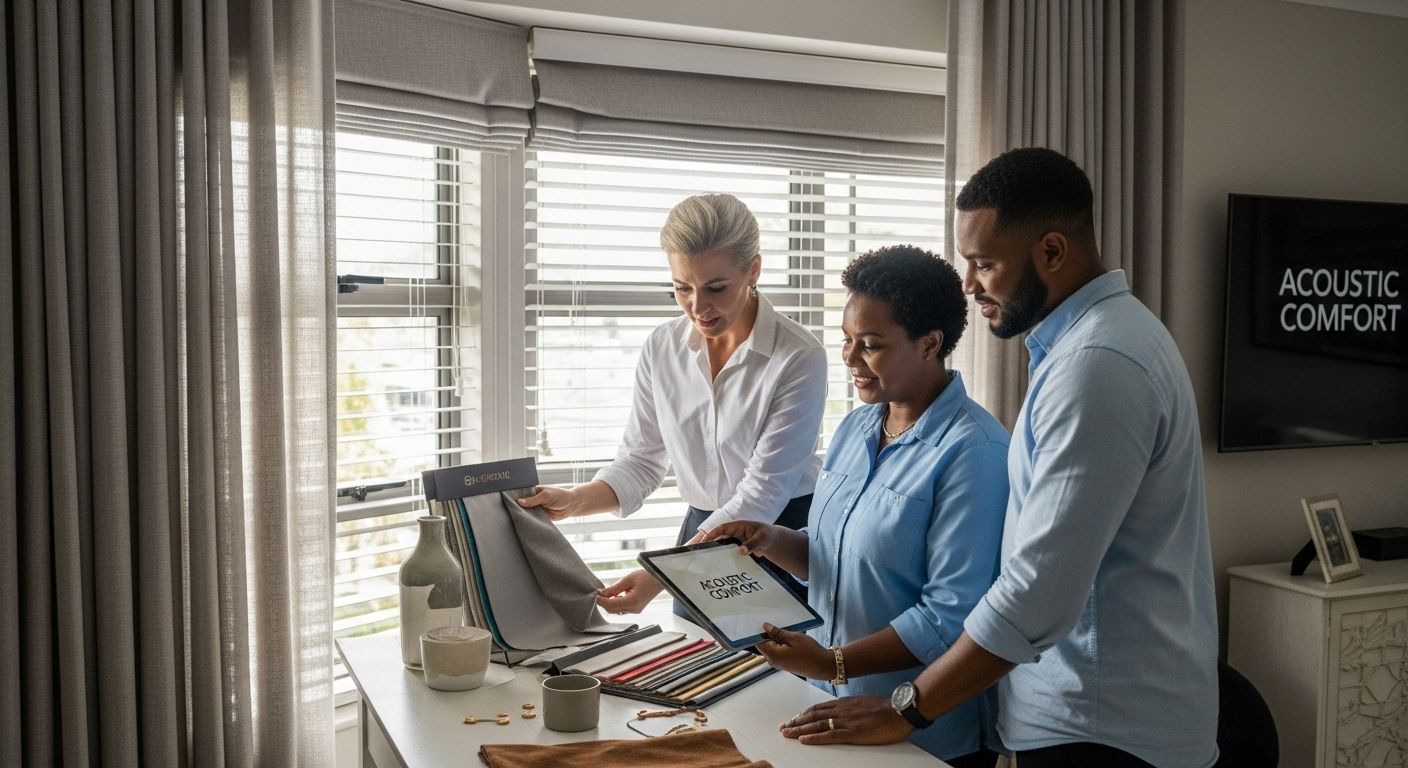
Property owners should consider professional acoustic consultations to develop tailored solutions. Factors like room dimensions, window sizes, external noise sources, and interior design aesthetics all play crucial roles in creating an optimal acoustic environment.
Ultimately, maximizing acoustic comfort is an art and science. By combining advanced materials, strategic installation techniques, and comprehensive design approaches, it becomes possible to transform noisy spaces into serene sanctuaries that promote relaxation, concentration, and overall well-being.
Frequently Asked Questions
What are the acoustic benefits of window coverings?
Window coverings can absorb up to 60% of incoming sound waves, significantly reducing noise levels in your home and improving overall acoustic comfort.
Which types of window coverings are best for sound reduction?
Heavyweight fabrics like velvet, wool, and specially designed acoustic curtains provide the best sound absorption, while options like cellular blinds and multi-layered drapery further enhance noise reduction.
How can I maximize the acoustic performance of my window treatments?
To maximize acoustic performance, use full-length curtains, mount them close to windows to minimize gaps, and consider layering different types of window coverings.
Do professional installations enhance the acoustic properties of window coverings?
Yes, professional installations can optimize the acoustic performance of window coverings by ensuring proper placement and reducing sound leakage.
Transform Your Durban Home with Proven Acoustic Window Solutions
If the endless buzz and city noise outside your Durban windows have left you searching for real relief, you are not alone. The article highlighted how most of that persistent noise sneaks in through windows and underused surfaces, leaving your space less peaceful than it could be. By now, you understand what quality sound-absorbing window coverings can do for your home’s comfort and quiet.
At Urban Studio Designs, we take these insights and turn them into reality with our custom window covering solutions. Our expert team brings you durable blinds, layered curtains, and cutting-edge shutters that don’t just look good but actively reduce unwanted noise. Every product is made to measure, fitted with care, and designed for lasting acoustic benefits. Imagine the calming effect of curtains that trap sound or the elegance of blinds that also serve as a noise barrier—all in styles to match your décor.

Ready to enjoy true acoustic comfort in your Durban space? Discover the difference with tailored window coverings that deliver on every promise from the article. Explore our range and see how easy it is to choose products that keep your home both stylish and serene. Visit Urban Studio Designs now and take the first step to a quieter, more restful home environment. Your peaceful Durban retreat starts here.
