
Choosing the right window treatment for your office can shape the entire atmosphere of your workspace. Studies show that modern blinds can improve workplace productivity by up to 40% due to their superior light control and management functionality. But here’s the kicker: many people underestimate the impact of this decision. While curtains may add a touch of elegance, they often fall short in providing the essential benefits that blinds offer. Understanding the implications of both can transform your office from a mere workspace into an efficient, inspiring environment.
Table of Contents
- Curtains Or Blinds Better For Office
- Office Curtains Pros And Cons
- Office Blinds Pros And Cons
- Which Is Right For Your Office
Quick Summary
| Takeaway | Explanation |
|---|---|
| Blinds offer superior light control | Modern office blinds allow precise adjustment of lighting levels, critical for productivity, especially in presentation areas and workstations. |
| Maintenance is easier with blinds | Blinds require less upkeep than curtains, resisting dust and requiring only a simple wipe-down, making them ideal for high-traffic environments. |
| Cost-effective and energy-efficient | Blinds can significantly lower energy costs by reducing heat gain and loss, contributing to better environmental sustainability in office settings. |
| Curtains enhance aesthetic value | While they may have functional limitations, curtains add a sophisticated look, contributing to brand identity and interior design when chosen carefully. |
| Consider specific needs before choosing | Assess your office’s light control, privacy, maintenance capacity, and budget before deciding on the most suitable window treatment solution. |
Curtains or Blinds Better for Office?
Choosing the right window treatment for an office environment involves more than just aesthetic considerations. The decision between curtains and blinds can significantly impact workplace productivity, energy efficiency, and overall professional atmosphere.
Light Control and Workplace Productivity
In modern office settings, precise light management is crucial. Blinds offer superior control compared to traditional curtains, allowing employees to adjust light levels with remarkable precision. Global market research reveals that smart blinds with motorized features are becoming increasingly popular in professional environments, providing workers the ability to instantly modify lighting conditions.
Blinds enable quick transitions between complete darkness and full illumination, which is essential for presentation spaces, meeting rooms, and individual workstations. Venetian and vertical blinds, in particular, allow for nuanced light filtering, reducing glare on computer screens while maintaining a clean, professional appearance.
Practical Considerations for Office Environments
When comparing curtains versus blinds for office spaces, practical functionality becomes paramount. Blinds typically require less maintenance and are more durable in high-traffic professional environments. They resist dust accumulation more effectively and can be cleaned quickly with a simple wipe-down, unlike fabric curtains that often need professional cleaning.
The South African office design market demonstrates a clear preference for blinds, with market projections indicating a growing trend towards window treatments that combine aesthetic appeal with functional efficiency. For commercial spaces in urban centers like Durban, blinds offer a sleek, modern solution that aligns with contemporary workplace design principles.
Cost-Effectiveness and Energy Efficiency
Beyond aesthetic considerations, blinds provide significant energy management benefits. Aluminum and cellular blinds can dramatically reduce heat gain during summer and heat loss during winter, contributing to lower energy consumption. In a typical office setting, this translates to meaningful cost savings and improved environmental sustainability.
A comprehensive analysis shows that well-selected blinds can reduce solar heat gain by up to 45%, compared to traditional curtains. This energy efficiency is particularly crucial in South African offices, where temperature management can represent a substantial operational expense.
While curtains remain an option, the modern office increasingly favors blinds for their combination of functionality, design flexibility, and practical advantages. Commercial property managers and interior designers consistently recommend blinds as the superior choice for professional environments that demand both style and substance.
For businesses seeking optimal window treatments, the evidence strongly suggests that blinds offer a more comprehensive solution for office spaces – delivering precision, efficiency, and a professional aesthetic that curtains struggle to match.
Office Curtains: Pros and Cons
Curtains remain a classic window treatment option for office environments, offering a unique blend of aesthetic appeal and functional characteristics. Understanding their comprehensive advantages and potential limitations is crucial for making an informed design decision that balances style, practicality, and workplace productivity.
Aesthetic and Professional Presentation
Office curtains serve more than just a functional purpose – they are a critical element of interior design that communicates professionalism and brand identity. Floor-length curtains, in particular, can create an atmosphere of sophistication and elegance, transforming a standard workspace into a refined professional environment. Design experts suggest that the length and style of curtains can significantly influence the perceived quality and character of an office space.
The fabric selection plays a pivotal role in defining the office’s aesthetic. Heavyweight materials like wool blends or high-quality polyester can convey a sense of luxury and durability, while lighter fabrics such as linen provide a more relaxed and contemporary feel. Color choices can also strategically align with corporate branding, creating a cohesive visual identity throughout the workspace.
Functional Considerations and Limitations
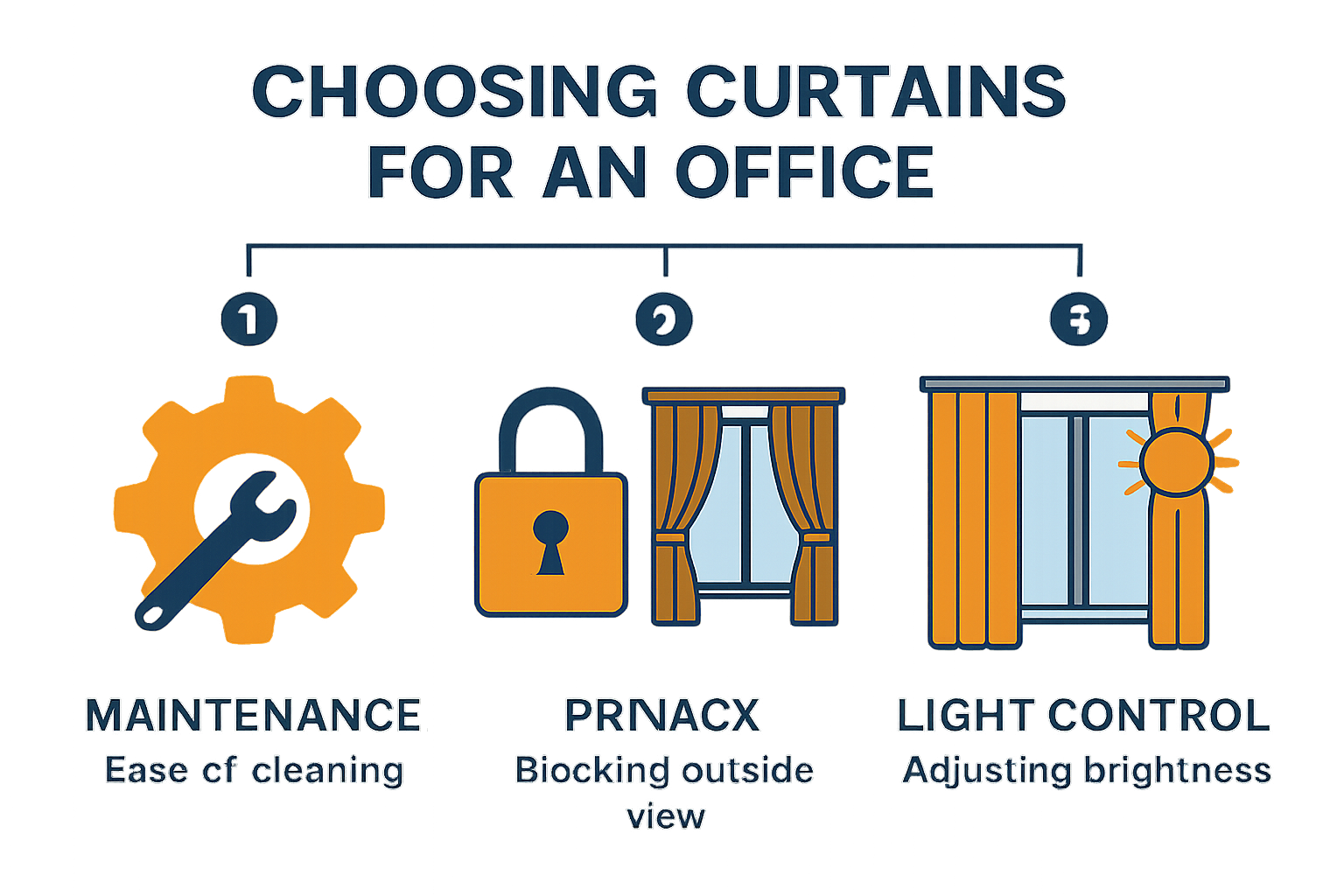
While curtains offer aesthetic advantages, they come with distinct functional challenges in office settings. Maintenance becomes a critical consideration, as fabric curtains tend to accumulate dust, allergens, and require more frequent professional cleaning compared to alternative window treatments. Interior design research indicates that the cleaning and maintenance costs for office curtains can be substantially higher than those for blinds or other window coverings.
Privacy and light control present another nuanced challenge. Floor-length curtains provide excellent visual isolation and light blocking capabilities, which can be advantageous for meeting rooms or spaces requiring confidentiality. However, they may also reduce natural light penetration, potentially creating a darker, less energetic work environment. Short or café-style curtains offer a compromise, allowing more natural light while maintaining a degree of privacy.
Cost and Energy Efficiency Dynamics
From an economic perspective, office curtains represent a significant investment with complex cost considerations. Initial installation expenses can be higher compared to standard blinds, particularly when selecting premium fabrics and custom designs. However, high-quality curtains can contribute to thermal insulation, potentially reducing energy consumption by minimizing heat transfer through windows.
The energy efficiency of curtains depends greatly on material selection and installation technique. Thermal-lined curtains can provide substantial insulation, helping to maintain consistent indoor temperatures and reduce heating and cooling costs. In South African office environments, where temperature management is crucial, strategically chosen curtains can contribute to overall energy conservation.
Ultimately, the decision to incorporate curtains in an office space requires a holistic evaluation of aesthetic desires, functional requirements, maintenance capabilities, and budget constraints. While they offer unique design opportunities, businesses must carefully weigh the comprehensive implications of their window treatment choices to ensure optimal workplace performance and visual appeal.
Office Blinds: Pros and Cons
Blinds represent a sophisticated and functional window treatment solution for modern office environments, offering a range of benefits and potential limitations that businesses must carefully evaluate. Understanding the comprehensive characteristics of office blinds is essential for making an informed design decision that balances aesthetic appeal, practicality, and workplace efficiency.
Technological Adaptability and Light Management
Modern office blinds have evolved far beyond simple light blocking mechanisms. Research from energy efficiency studies demonstrates that contemporary blinds can significantly contribute to workplace productivity and energy conservation. Smart blinds with motorized controls enable precise light management, allowing employees to instantly adjust illumination levels without disrupting workflow.
The ability to control glare and visual comfort is particularly critical in office settings. Workplace ergonomics research indicates that proper window treatments can reduce screen glare by up to 70%, directly impacting employee comfort and productivity. Venetian and vertical blinds offer exceptional flexibility, enabling nuanced light filtering that can be adjusted throughout the day to maintain optimal working conditions.
Maintenance and Durability Considerations
Office blinds distinguish themselves through remarkable durability and low maintenance requirements. Unlike fabric curtains, blinds – particularly those made from aluminum or synthetic materials – resist dust accumulation and can be quickly cleaned with a simple wipe-down. This characteristic makes them particularly suitable for high-traffic professional environments where cleanliness and efficiency are paramount.
Local industry analysis suggests that aluminum Venetian blinds, while offering excellent light control, may have limitations in achieving complete darkness. This consideration is crucial for spaces like presentation rooms or areas requiring total light blockage. However, cellular or blackout blinds can effectively address this potential drawback, providing comprehensive light management solutions.
Economic and Environmental Implications
From an economic perspective, office blinds represent a strategic investment in workplace infrastructure. The Department of Energy research reveals that well-managed window treatments can reduce heating and cooling costs by up to 25%, presenting a compelling case for their long-term financial benefits.
Moreover, blinds contribute to environmental sustainability by improving building energy efficiency. Thermal-reflective and cellular blind designs can significantly minimize heat transfer, helping businesses reduce their carbon footprint while maintaining comfortable interior temperatures. In South African office environments, where temperature management is critical, this attribute becomes especially valuable.
The selection of office blinds requires a holistic approach that considers technological capabilities, maintenance requirements, aesthetic preferences, and economic implications. While they offer numerous advantages, businesses must carefully assess their specific workplace needs to determine the most suitable window treatment solution. The right blinds can transform an ordinary office space into an efficient, comfortable, and visually appealing professional environment.
Which is Right for Your Office?
Selecting the ideal window treatment for your office is a nuanced decision that requires careful consideration of multiple factors beyond simple aesthetic preferences. The choice between curtains and blinds can significantly impact workplace productivity, energy efficiency, and overall professional environment.
Assessing Your Specific Office Needs
Every office environment is unique, with distinct requirements driven by architectural design, workplace culture, and functional objectives. Market research indicates that urban professional spaces increasingly prioritize window treatments that combine technological adaptability with design flexibility.
Key evaluation criteria should include:
- Light Control Requirements: Does your office need precise illumination management?
- Privacy Levels: What degree of visual isolation is necessary for your workspace?
- Maintenance Capacity: Can your organization consistently maintain the chosen window treatment?
- Budget Constraints: What investment can you realistically allocate to window coverings?
Technology and Future-Proofing Considerations
Modern office design increasingly embraces smart window treatment solutions. Emerging market trends demonstrate a growing preference for automated and motorized options that integrate seamlessly with workplace technology.
Blinds generally offer superior technological integration, with options including:
- Motorized adjustment mechanisms
- Light-sensing automated controls
- Energy-efficient thermal management
- Remote operational capabilities
These advanced features make blinds particularly attractive for forward-thinking office environments seeking to optimize workplace efficiency and demonstrate technological sophistication.
Cost-Benefit Analysis and Long-Term Investment
The financial implications of window treatment selection extend far beyond initial purchase costs. Industry projections suggest that the South African market values window treatments that deliver comprehensive performance and durability.
Blind solutions typically provide more substantial long-term value through:
- Lower maintenance expenses
- Enhanced energy efficiency
- Greater durability
- More precise environmental control
While curtains might offer initial aesthetic appeal, blinds frequently represent a more strategic investment for professional environments. Their ability to adapt to changing workplace requirements and provide sophisticated functional benefits makes them an increasingly preferred choice among progressive businesses.
Ultimately, the right window treatment depends on your specific organizational context. Carefully evaluate your workplace’s unique characteristics, technological needs, and aesthetic aspirations. Consulting with professional interior designers or window treatment specialists can provide tailored insights that align perfectly with your office’s distinctive requirements, ensuring you make an informed decision that enhances both form and function.
Frequently Asked Questions
What are the benefits of blinds in an office environment?
Blinds offer superior light control, require less maintenance, and are more cost-effective and energy-efficient compared to curtains. They help reduce glare, enhance workplace productivity, and can lower energy bills significantly.
Are curtains a better aesthetic choice for office spaces?
Curtains can add elegance and sophistication to an office, enhancing the overall aesthetic and contributing to brand identity. High-quality fabrics can create a luxurious feel, but functional limitations may impact their practicality.
How do blinds compare to curtains in terms of maintenance?
Blinds are easier to maintain than curtains as they resist dust accumulation and can be cleaned with a simple wipe-down, making them ideal for high-traffic office environments.
What factors should I consider when choosing between curtains and blinds for my office?
Consider light control needs, privacy preferences, maintenance capacity, and budget constraints. Each office has unique requirements that can dictate whether blinds or curtains are more suitable.
Transform Your Office Today with Custom Solutions!
Are you ready to elevate your workspace and tackle the challenges outlined in our article on Curtains vs Blinds for Your Office? Finding the perfect window treatment that supports light control, productivity, and aesthetic appeal can feel overwhelming. But don’t worry! At Urban Studio Designs, we specialize in custom-made solutions tailored to your specific office needs.

Why settle for ordinary when you can enhance your environment? Our extensive collection features:
- Blinds and shutters for both indoor and outdoor use that adapt to your light management needs.
- Custom curtains that add a touch of elegance to your office while reflecting your brand identity.
- Insect and security screens to provide comfort and peace of mind in high-traffic areas.
Don’t wait—transform your office atmosphere today! Visit Urban Studio Designs to explore our array of colours and styles that suit any décor scheme. Act now to invest in quality solutions that last, ensuring your workspace is a place of inspiration and productivity!
