
Navigating the world of window coverings can feel overwhelming, especially with all the specific terminology involved. Over 70% of homeowners admit to feeling confused when discussing window treatments with professionals. But here’s the surprising part: being familiar with key terms can completely transform your experience. Rather than dreading conversations about shades, blinds, and drapes, you’ll gain the confidence to make informed decisions that elevate your space. Understanding window covering terminology not only enhances communication with experts but also leads to choices that are both stylish and energy-efficient.
Table of Contents
- Understand Key Blind And Shade Terms
- Getting To Know Shutter Language
- Drapes And Curtains Explained Simply
- Basic Structural Components
- Fabric And Style Terminology
- [Functional And Mounting Considerations](#functional-and-mountin g-considerations)
- Common Window Treatment Questions Answered
Quick Summary
| Takeaway | Explanation |
|---|---|
| Understanding Window Treatment Terms is Crucial | Familiarity with terms like light filtering, blackout coverage, and cellular shades enables effective communication and precise selection when discussing window coverings with professionals. |
| Shutter Language and Structure Matter | Knowing the basic components of shutters, such as panels, louvers, and tilt bars, aids in selecting the right product that fits aesthetic and functional needs. |
| Drapery Functionality Enhances Design | Recognizing elements such as fabric types and mounting options allows for strategic decisions that improve both the style and functionality of window treatments. |
| Informed Choices Lead to Energy Efficiency | Awareness of how different window coverings affect energy consumption can guide selections that enhance comfort and reduce costs in diverse South African climates. |
| Maintenance is Key for Longevity | Adopting proper cleaning and care practices ensures that window treatments remain functional and visually appealing over time, which is vital in maintaining an inviting space. |
Understand key blind and shade terms
Navigating the world of window coverings requires understanding specific terminology that helps you make informed decisions about your home or office design. Window covering terminology goes beyond simple descriptions, encompassing technical details, design elements, and functional characteristics that impact both aesthetics and performance.
Essential Window Covering Vocabulary
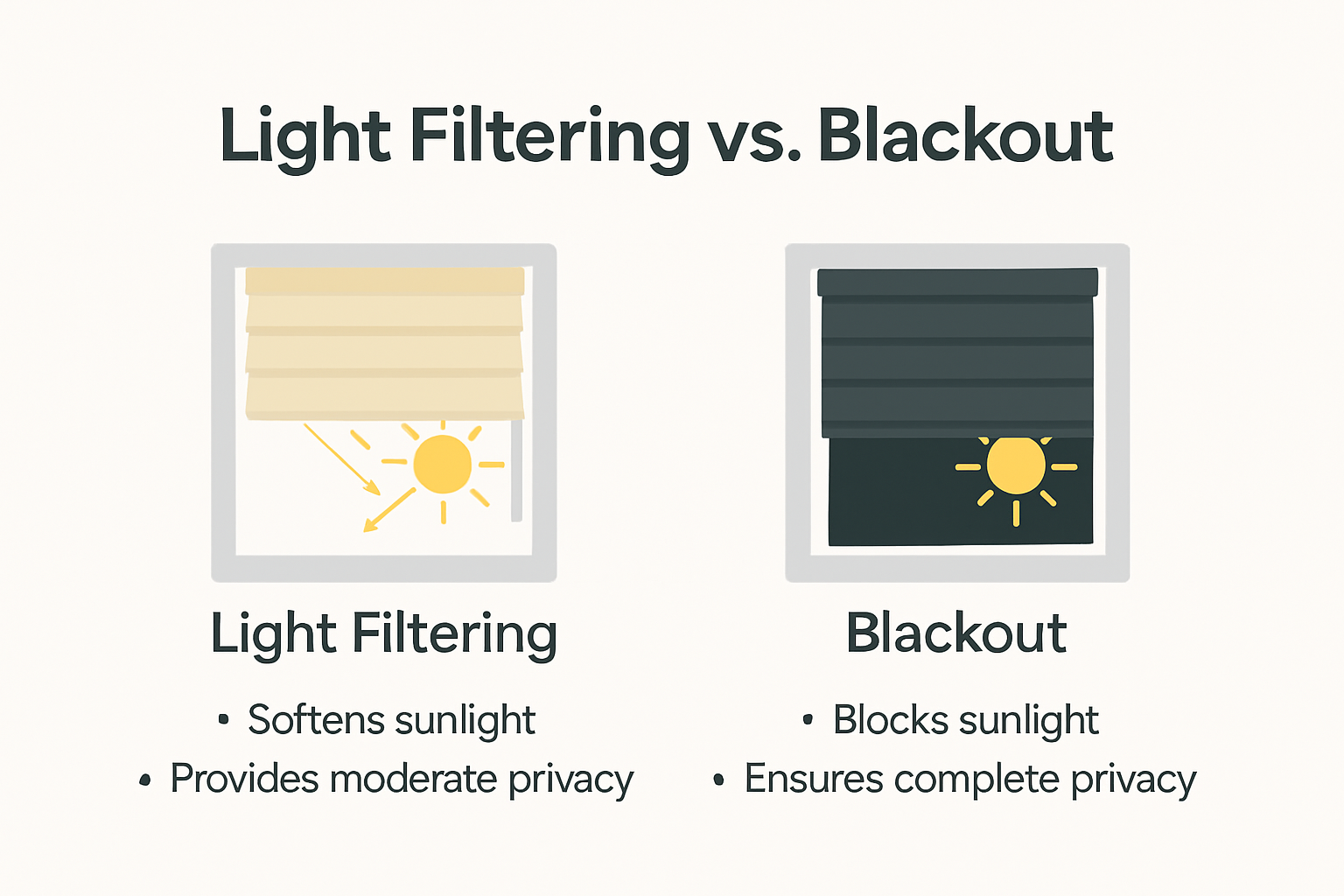
Knowing the right terms helps you communicate effectively with professionals and make precise selections. Light filtering describes window coverings that permit soft, diffused light through the material while maintaining privacy. This technique allows natural illumination without completely exposing interior spaces.
Some critical terms include:
-
Cellular/Honeycomb Shades: Innovative window treatments featuring hexagonal air pockets that provide superior thermal insulation by trapping air between fabric layers. These shades create an additional barrier against temperature fluctuations, helping regulate indoor climate efficiently.
-
Roller Shades: Minimalist window coverings constructed from a single material sheet that rolls up or down using a precise mechanism. They offer clean lines and straightforward light control, making them popular in modern interior design.
-
Blackout Coverage: A specific shade characteristic where zero light penetrates through the material, ideal for bedrooms, home theatres, or spaces requiring complete darkness.
Technical Terminology Explained
Professional window covering experts use specific technical language that might seem complex to uninitiated consumers. Bottom rail refers to the horizontal bar at the base of a shade or blind that provides weight and helps maintain smooth movement. Stack height describes the amount of space occupied by window coverings when fully raised, crucial for understanding how much of your window will remain visible.
Mount types represent another critical aspect of window covering terminology. Inside mount means installing the covering within the window frame, creating a clean, integrated look. Outside mount involves placing the covering on the wall surrounding the window, which can make windows appear larger and provide additional light-blocking capabilities.
Operational and Design Terminology
Understanding operational terms helps you select window coverings matching your specific needs. Cordless operation indicates mechanisms that allow raising and lowering without traditional pull cords, offering enhanced safety and a sleeker appearance. Motorized systems represent advanced technology enabling remote or programmed control of window treatments, perfect for hard-to-reach windows or smart home integration.
Design-related terms like fabric weight, opacity levels, and texture grades help you assess the visual and functional qualities of window coverings. Heavier fabrics typically provide better insulation, while varying opacity levels determine how much light transmission occurs.
By mastering these window covering terminology basics, you’ll approach selection with confidence, understanding the nuanced characteristics that transform simple window treatments into sophisticated interior design elements. Whether you’re a homeowner, interior designer, or property manager in Durban, this knowledge empowers you to make informed, stylish choices that enhance both functionality and aesthetic appeal.
Getting to know shutter language
Window shutters represent more than decorative elements; they are complex architectural features with a specialized language that requires understanding. Mastering shutter terminology empowers homeowners, designers, and professionals to communicate precisely about these sophisticated window treatments.
Core Shutter Structural Components
Every shutter comprises fundamental structural elements that define its functionality and aesthetic appeal. The frame serves as the foundational structure, consisting of vertical stiles and horizontal rails that create the shutter’s basic skeleton. These components work together to support and stabilize the entire window covering.
Key structural terms include:
- Panel: The movable section of the shutter that swings open or closed, typically constructed from wood, composite, or vinyl materials.
- Louvers: Horizontal slats that can be adjusted to control light, airflow, and privacy, ranging from narrow to wide configurations.
- Tilt bar: The central mechanism allowing simultaneous adjustment of all louvers, enabling precise light and privacy management.
Mounting and Installation Terminology
Understanding mounting terminology is crucial for proper shutter selection and installation. Shutter mounting techniques vary based on window architecture and design preferences.
Inside mount involves installing shutters within the window frame, creating a sleek, integrated appearance that showcases window depth. Conversely, outside mount positioning places shutters on the wall surrounding the window, which can visually enlarge window dimensions and provide additional light-blocking capabilities.
Additional mounting-related terms include:
- Shutter jamb: The vertical side supports forming the frame’s perimeter
- Header: The top horizontal component of the shutter frame
- Sill: The bottom horizontal edge where the shutter rests
Functional and Design Classification
Shutter terminology extends beyond physical components to encompass functional classifications. Plantation shutters, characteristically featuring wider louvers, originated in Southern United States agricultural estates and remain popular for their elegant, expansive light control. Traditional shutters typically feature narrower louvers and more intricate design details.
Design classifications also consider material composition:
- Hardwood shutters: Premium options offering natural beauty and durability
- Composite shutters: Engineered materials providing moisture resistance and consistent performance
- Vinyl shutters: Lightweight, cost-effective options ideal for high-humidity environments
Each material brings unique characteristics, influencing durability, maintenance requirements, and aesthetic appeal. Professionals and homeowners in Durban can leverage this specialized language to select window treatments that perfectly balance functionality, style, and environmental compatibility.
By comprehending shutter language, you transform window covering selection from a potentially overwhelming experience into a precise, informed decision-making process. Whether renovating a luxury property, designing a commercial space, or upgrading a residential interior, understanding these terms empowers you to communicate effectively and choose shutters that truly complement your specific architectural and design requirements.
Drapes and curtains explained simply
Drapes and curtains are more than simple window coverings; they are sophisticated design elements that dramatically transform interior spaces. Understanding their nuanced terminology helps homeowners and design professionals make informed decisions about window treatments that balance aesthetics, functionality, and personal style.
Basic Structural Components
Every curtain or drape consists of fundamental elements that define its performance and appearance. The fabric panel represents the primary material that covers the window, with variations in length, width, and composition determining its visual and functional characteristics.
Key structural terms include:
- Heading: The top section of the curtain that connects to the rod or track, with different styles like pinch pleat, tab top, and rod pocket affecting how the curtain hangs
- Hem: The bottom finished edge of the curtain, providing weight and structural integrity
- Fullness: The ratio of fabric width to the window width, determining how gathered or flat the curtain appears when closed
Fabric and Style Terminology
Curtain fabrics range from lightweight sheers to heavy, insulating materials. Sheer curtains allow soft light transmission while maintaining privacy, creating an ethereal, soft atmosphere. Blackout curtains completely block external light, ideal for bedrooms, home theatres, or spaces requiring maximum darkness.
Style classifications reveal the curtain’s design intention:
- Cafe curtains: Covering only the lower half of a window, providing partial privacy and light control
- Taped curtains: Featuring a sewn-in tape at the top for uniform pleating and smooth hanging
- Eyelet curtains: Characterized by metal rings at the top, offering a modern, clean aesthetic
Functional and Mounting Considerations
Mounting techniques significantly impact a curtain’s visual and practical performance. Inside mount installations fit within the window frame, creating a streamlined look that showcases window architecture. Outside mount options extend beyond the window frame, making windows appear larger and providing enhanced light-blocking capabilities.
Functional considerations include:
- Thermal lining: Additional fabric layer providing insulation and energy efficiency
- Acoustic properties: Certain fabrics and constructions can reduce external noise
- Light filtering: Varying opacity levels controlling natural light intensity
For Durban’s diverse environments—from luxurious homes to commercial spaces—understanding curtain and drape terminology transforms window treatments from mere functional accessories to strategic design elements. Whether you’re an interior designer seeking precise specifications or a homeowner wanting to enhance your living space, this knowledge empowers you to select window coverings that perfectly blend style, comfort, and practicality.
By demystifying curtain and drape language, you gain the confidence to make informed choices that reflect your aesthetic preferences and functional requirements. Each term represents an opportunity to create more intentional, beautifully designed interior environments.
Common window treatment questions answered
Window treatments can be complex, leaving many homeowners and design professionals with numerous questions about selection, functionality, and maintenance. This section addresses the most frequently asked queries to help you make informed decisions about your window coverings.
Functionality and Performance Queries
Understanding the core purpose of window treatments goes beyond simple aesthetics. Window coverings serve multiple critical functions, including privacy, light control, and energy efficiency.
Frequently asked questions include:
-
How do cellular shades improve home energy efficiency? Honeycomb or cellular shades create air pockets that act as thermal barriers, reducing heat transfer and helping to lower energy costs. Their unique design traps air, providing insulation that keeps interiors cooler in summer and warmer in winter.
-
Can window treatments really impact my home’s temperature? Absolutely. Properly selected window coverings can reduce heat gain by up to 45% during summer and prevent heat loss by approximately 10% during winter, making them a strategic tool for temperature management.
-
What’s the difference between light filtering and blackout options? Light filtering treatments allow soft, diffused light to enter while maintaining privacy. Blackout options completely block external light, ideal for bedrooms, home theatres, or spaces requiring total darkness.
Selection and Installation Considerations
Choosing the right window treatment involves understanding various technical and design aspects. Mount types play a crucial role in both functionality and appearance. Inside mounts fit within the window frame, creating a clean, integrated look, while outside mounts extend beyond the frame, making windows appear larger and providing additional light-blocking capabilities.
Key selection considerations include:
- Measuring accuracy: Precise measurements are critical for proper fit and functionality
- Material durability: Different environments require specific material considerations
- Operation mechanisms: Choosing between manual and motorized options based on specific needs
Maintenance and Longevity Questions
Proper care extends the life and performance of window treatments. Cleaning frequency depends on material type, with fabric treatments requiring different maintenance approaches compared to wooden or vinyl options.
Practical maintenance tips include:
- Regular dusting with microfiber cloths
- Periodic professional cleaning for delicate materials
- Avoiding harsh chemicals that can damage fabric or finish
For Durban’s diverse environments—from coastal areas with salt air to urban spaces with varying humidity levels—understanding these nuanced care requirements becomes even more critical. Interior designers, homeowners, and property managers can leverage this knowledge to select window treatments that not only look beautiful but also perform optimally in specific local conditions.
By addressing these common questions, we demystify the world of window treatments. Whether you’re renovating a luxury home, designing a commercial space, or simply looking to enhance your current interior, understanding these key aspects empowers you to make informed, strategic choices that balance aesthetics, functionality, and long-term value.
Frequently Asked Questions
What are cellular shades and how do they work?
Cellular shades, also known as honeycomb shades, feature hexagonal air pockets that provide excellent thermal insulation by trapping air. This design helps regulate indoor temperatures, making them energy-efficient options for homes.
How do I choose between light filtering and blackout window treatments?
Light filtering treatments allow soft, diffused light into a room while maintaining privacy, making them suitable for living areas. In contrast, blackout treatments completely block all light, which is ideal for bedrooms or spaces where total darkness is desired.
What is the difference between inside mount and outside mount window coverings?
An inside mount is installed within the window frame for a streamlined look, while an outside mount extends beyond the frame, potentially making the window appear larger and providing better light control. Choosing between them depends on your aesthetic preference and light management needs.
How do I properly maintain my window treatments?
Regular maintenance includes dusting with a microfiber cloth and checking for any signs of wear. For fabric treatments, avoid harsh chemicals and consider professional cleaning for delicate materials. Maintenance frequency should align with environmental conditions in your area, especially in humid climates.
Transform Your Space with Expert Window Solutions!
Navigating the world of window coverings can be daunting, especially when trying to grasp all the intricate terms like cellular shades, blackout treatments, and inside mount options. It’s understandable to feel overwhelmed! But here at Urban Studio Designs, we bridge the gap between the complex terminology and your ideal window solutions.

Imagine your home adorned with custom-made blinds that not only elevate your décor but also offer optimal energy efficiency and enhance your privacy. Our extensive collection includes a variety of window coverings and insect & security screens, catering to all your needs. With the quality and durability backed by our warranty, investing in our products means investing in peace of mind.
Don’t let uncertainty hold you back! Discover the perfect blend of style and functionality designed just for you. Visit Urban Studio Designs today and explore the beautiful options available to transform your space into a haven of comfort and elegance! Your ideal window treatment awaits!
